
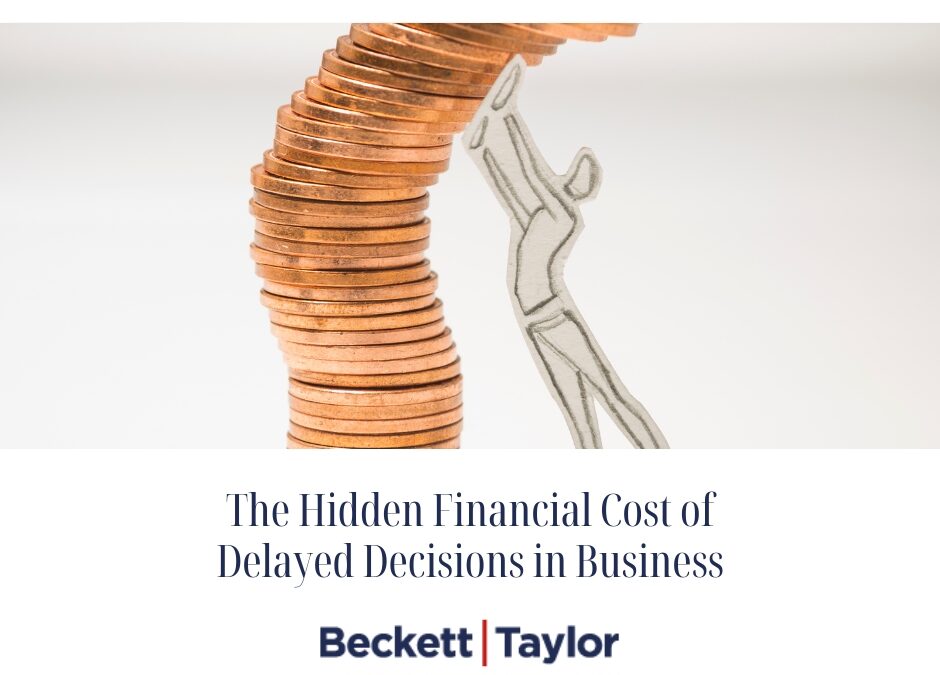
Every business owner has faced moments of hesitation. Whether it is delaying a hire, postponing a price increase, avoiding investment in technology or putting off financial planning, delayed decisions are often driven by uncertainty or fear of making the wrong move.
However, while caution can sometimes be sensible, constantly delaying important business decisions can create significant financial consequences over time. For many SMEs, the biggest financial risks are not always obvious expenses — they are the opportunities lost, inefficiencies ignored and problems allowed to grow because action was postponed for too long.
In 2026, financially successful businesses are increasingly those that make informed decisions quickly, adapt to changing conditions and proactively plan ahead.
Delaying Price Increases Can Damage Profitability
One of the most common examples of costly hesitation is delaying price increases. Many business owners worry about losing customers or becoming less competitive, particularly during uncertain economic conditions. However, rising operating costs, inflation and supplier increases mean holding prices too low for too long can quietly erode profitability.
Businesses that fail to review pricing regularly may find themselves:
- Working harder for smaller margins
- Struggling with cash flow pressure
- Unable to reinvest in growth
- Falling behind competitors financially
Strong business profitability strategies involve reviewing pricing consistently and ensuring revenue keeps pace with increasing costs.
Waiting Too Long to Address Cash Flow Problems
Cash flow issues rarely appear overnight. More often, they develop gradually through late payments, rising expenses or weak financial oversight. Many SMEs delay addressing cash flow concerns because they hope problems will improve naturally. Unfortunately, hesitation often allows financial pressure to become much more severe.
Proactive businesses regularly monitor:
- Outstanding invoices
- Supplier commitments
- Upcoming tax liabilities
- Payroll obligations
- Monthly financial trends
Working with a chartered accountant in Essex can help identify early warning signs before cash flow problems become serious operational risks.
Delaying Recruitment Can Limit Growth
While hiring too early can create pressure, delaying recruitment for too long can also become expensive. Business owners often attempt to manage increasing workloads themselves rather than investing in additional support. Over time, this can lead to:
- Reduced productivity
- Missed sales opportunities
- Customer service issues
- Staff burnout
- Slower business growth
Successful SMEs understand that strategic recruitment is often an investment rather than simply another cost. Businesses that delay hiring critical staff may eventually lose far more in missed opportunities than they would have spent on salaries.
Avoiding Investment in Technology
Technology investment is another area where delayed decisions frequently create hidden costs. Many SMEs continue using outdated systems because replacing them feels expensive or disruptive. However, inefficient processes often cost businesses far more over time through:
- Wasted admin hours
- Increased human error
- Poor financial visibility
- Slower decision-making
- Reduced operational efficiency
Modern cloud accounting software and digital reporting tools can significantly improve business performance, particularly for growing SMEs managing increasing financial complexity. Businesses that embrace technology early are often better positioned to scale efficiently and remain competitive.
Delayed Tax Planning Creates Missed Opportunities
Tax planning should be a year-round process, yet many businesses leave important financial decisions until deadlines are approaching.
This reactive approach can result in:
- Missed tax-saving opportunities
- Reduced financial flexibility
- Unexpected liabilities
- Poor cash flow preparation
Forward-thinking businesses regularly review their financial position throughout the year to maximise efficiency and improve long-term planning. Working alongside a financial advisor companies rely on can help business owners take a more strategic approach to tax and financial decision-making.
Fear of Making the Wrong Decision
In many cases, delayed decisions are not caused by lack of ambition — they are caused by fear of making mistakes. Business owners often wait for “perfect timing” or complete certainty before taking action. However, in fast-moving markets, waiting too long can itself become the biggest risk.
Financially resilient businesses understand that not every decision will be perfect, but proactive action supported by accurate financial information usually creates better outcomes than prolonged indecision. The most successful SMEs are often those willing to adapt, review performance regularly and make informed adjustments quickly.
Every business decision carries some level of risk, but delaying important financial decisions can create hidden costs that gradually damage profitability, efficiency and growth potential. Whether it is pricing, hiring, investment or cash flow management, proactive decision-making gives businesses greater control and flexibility in uncertain markets.
For SMEs in 2026, strong financial visibility and strategic planning are becoming more important than ever. Businesses that act early and make informed decisions confidently are often the ones best positioned for sustainable long-term success.